web analytics
Obleser labAuditory Cognition, University of Lübeck

How minds and brains listen in an uncertain world

We are the Auditory Cognition group at the Department of Psychology, University of Lübeck. We study how people make sense of sound and speech when the signal, and the brain itself, are noisy.

+6 dB
One of the ideas we are currently fascinated by: uncertainty is nested. As a speech-like signal (faint line) travels from sensation to perception to confidence, each stage adds its own internal noise to the noise it inherits. Drag the slider to change the noise in the world.

Listening is inference. Our lab combines psychophysics, electro- and magnetoencephalography, pupillometry, pharmacological challenges and computational modelling to understand how listeners weigh uncertain sensory evidence, how attention filters what matters, and how these abilities change with age and hearing loss.

We use audition, speech and language as a model system for adaptive perception more broadly. Our work reaches from basic questions about neural variability and metacognition to translational research with hearing-aid and cochlear-implant users.

Our research programme

Latest

    All news

    Recent papers

      All publications
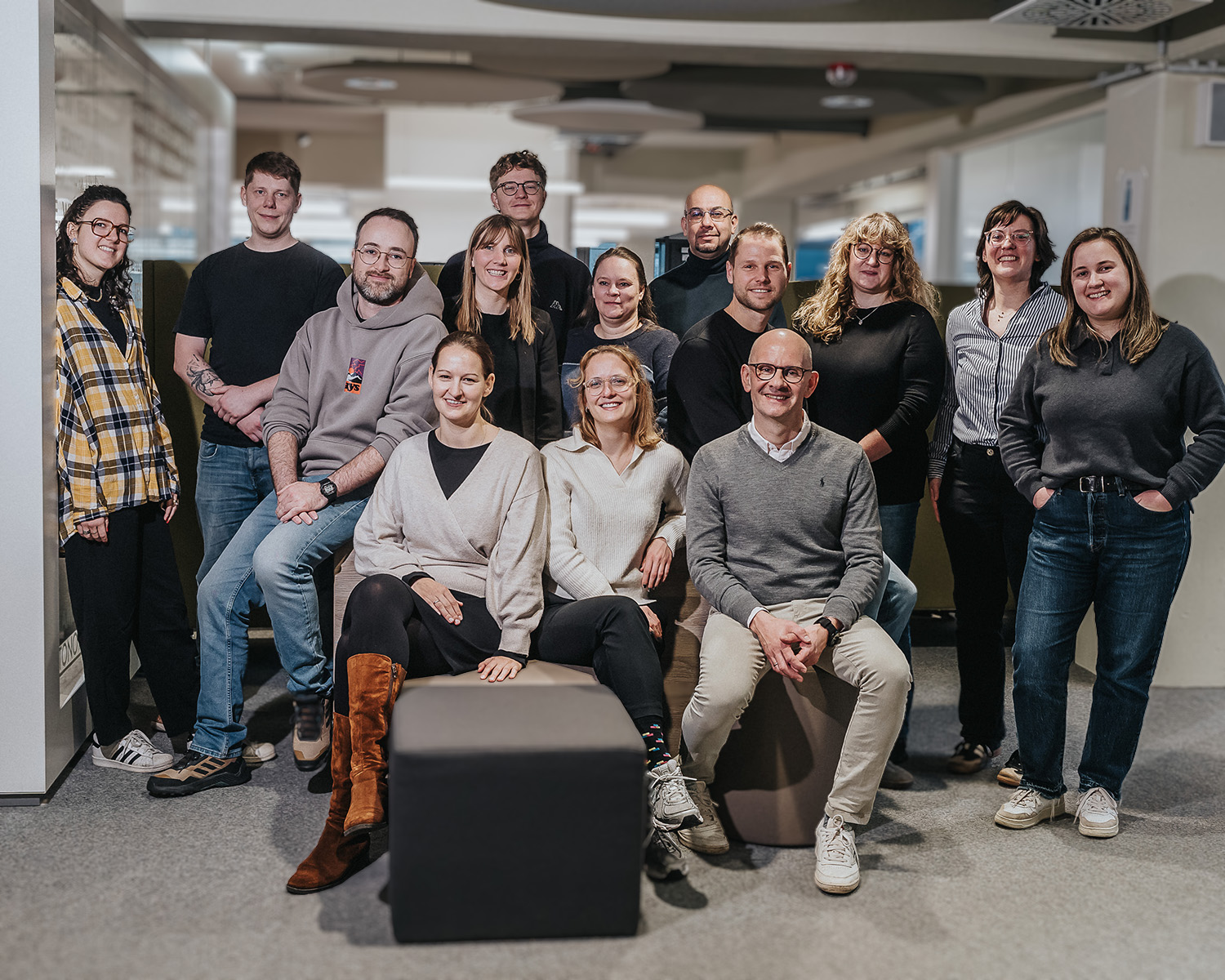
      Members of the Obleser lab standing together outside
      The Obleser lab on the move, 2023.

      Take part in a study

      We regularly look for adult volunteers, with and without hearing difficulties, for listening experiments in our labs in Lübeck and online. Participation is compensated. Write to hoeren@uni-luebeck.de and we will get back to you with current studies.

      Research

      We want to understand the neural and computational principles that let humans perceive and adapt under uncertainty. Hearing is our model system: it is fast, it degrades with age, and it is central to how we communicate.

      Perception and adaptation under uncertainty

      Every percept is a best guess. We ask how internal noise arises at the sensory, perceptual and metacognitive level, how these sources nest within one another, and how listeners calibrate their confidence. Psychophysical models, adaptive procedures and Bayesian observer models let us separate what is noise in the world from noise in the listener.

      Speech and language as a model of adaptive intelligence

      Understanding speech means predicting it. We study how listeners use context and predictability, which domain-general brain networks support comprehension, and how executive resources shape language processing across the adult lifespan.

      Neural variability and neural dynamics

      Brain activity is never still, and its fluctuations are informative. We study neural oscillations, the aperiodic spectral exponent as a window on excitation–inhibition balance, and state-dependent changes across circadian time and under pharmacological challenge.

      Dynamics of attention

      How does the auditory system focus on one voice and ignore another? We study the neural implementation of target selection and distractor suppression, the rhythmic nature of distractibility, and attention to sound in moving, real-world listeners.

      Translational auditory neuroscience

      Hearing loss is one of the largest modifiable risk factors for dementia. With clinical and industry partners we study listening effort, hearing aids and cochlear implants, tinnitus, and auditory hallucinations, aiming for measures that predict real-world outcomes.

      Methods and facilities

      OPM-MEG. Optically pumped magnetometers in a magnetically shielded room let participants move their heads while we record brain activity. The LEMMI research building, for which Jonas Obleser is spokesperson, will add a whole-head OPM-MEG, a large interactive virtual environment and a humanoid robot platform.

      EEG and pupillometry. Several electrophysiology labs with free-field and headphone sound delivery, eye tracking and pupillometry, including a spatial audio lab for realistic multi-talker scenes.

      Psychophysics. Adaptive procedures and model-based estimation of sensitivity and internal noise, in the lab and in the browser.

      Computational modelling. Encoding models (temporal response functions), network neuroscience, Bayesian and hierarchical models of behaviour, and mixed-effects statistics.

      Pharmacology and chronobiology. Pharmacological challenges and circadian designs, together with clinical partners at the University Hospital Schleswig-Holstein and the Center of Brain, Behavior and Metabolism (CBBM).
      How the lab is organised

      One lab, with teams that share methods, data and a weekly lab meeting.

      Jonas ObleserGroup leader
      Malte WöstmannSenior researcher, dynamics of attention
      • Max Schulz PhD candidate
      Mohsen AlavashStaff scientist, OPM-MEG operations
      • Christine Albrecht Postdoctoral researcher
      • Martin Orf Postdoctoral researcher
      • Judith Kunze PhD candidate
      • Robert Wiedenbeck Researcher
      Sarah TuneUniversity of Göttingen, supervising the DFG project
      • Andreja Stajduhar PhD candidate
      Lab managementAnika Hellberg, Anne Herrmann
      Research assistantsMarius Möller, Matthis Andreas, Nils Zimmermann, Friederike von Höhne, Hananja Ebelt, Bennet Wollmer, Merle von Nottbeck, Diana Plaumann, Michelle Pscheor, Jolina Härtel

      Collaborations

      Within Lübeck we work closely with the Center of Brain, Behavior and Metabolism, the University Hospital Schleswig-Holstein, the Technische Hochschule Lübeck and HörHanse e.V., the Lübeck hearing cluster. Current external partners include Sarah Tune and Merle Schuckart (Göttingen), Gesa Hartwigsen (Leipzig), Björn Herrmann (Baycrest, Toronto), Jonathan Peelle (Northeastern), Nathan Weisz, Sonja Kotz (Maastricht), Kirill Nourski (Iowa), Adam Naples (Yale) and Widex Sivantos Audiology.

      People

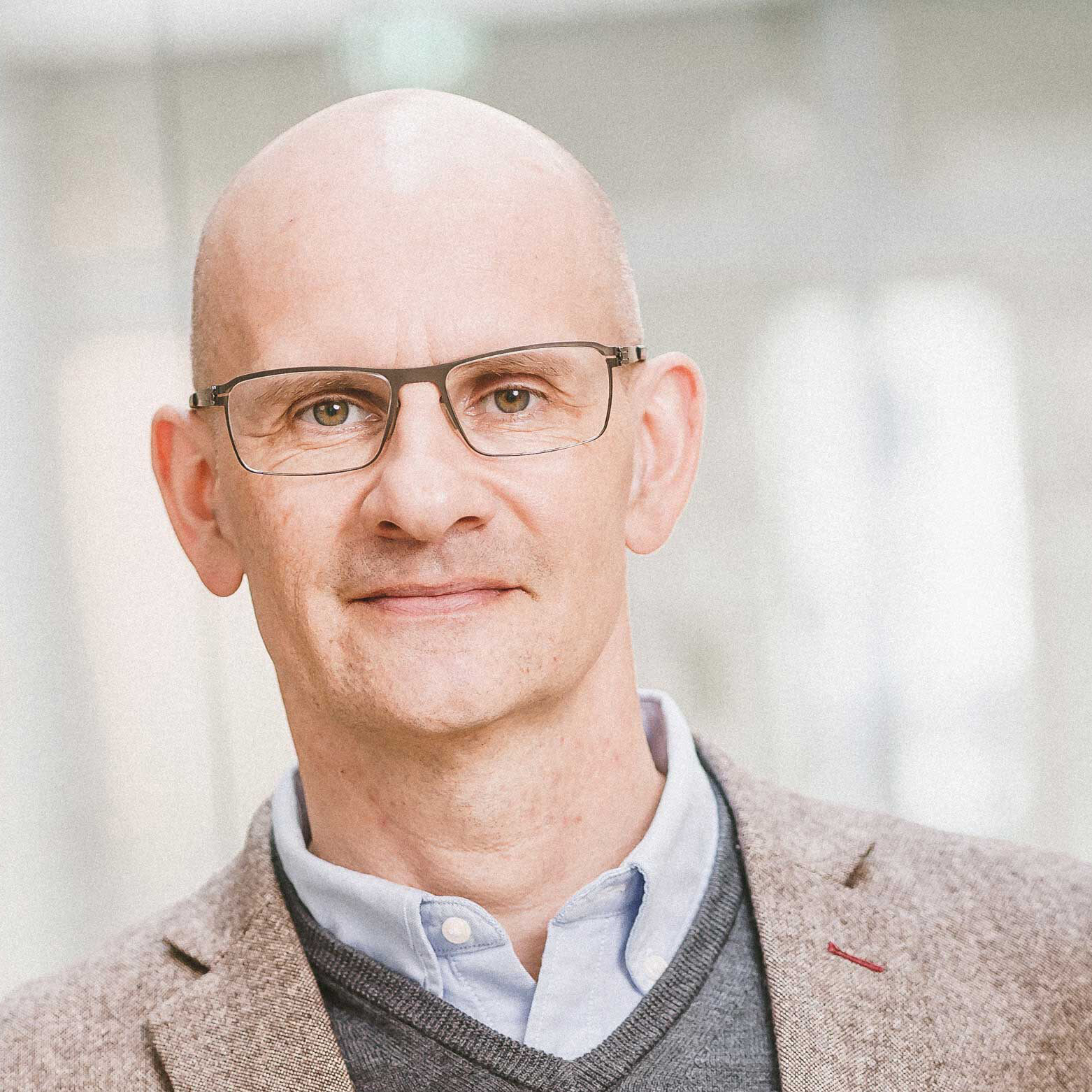
      Portrait of Jonas Obleser

      Photo: Guido Kollmeier

      Jonas Obleser

      Professor (W3) of Physiological Psychology and Research Methods, co-director of the Department of Psychology

      Jonas studied psychology with a minor in statistics at the University of Konstanz, where he also obtained his PhD in 2004. After research at University College London and the Max Planck Institute for Human Cognitive and Brain Sciences in Leipzig, where he led the Max Planck Research Group "Auditory Cognition" from 2011, he moved to Lübeck in 2015. He has held the chair in Physiological Psychology and Research Methods since 2016.

      His main interest lies in neural dynamics: the moment-to-moment brain states and the more stable brain traits that shape perception and behaviour, and how listeners know what they have heard.

      Google Scholar, PubMed, CV (PDF), jonasobleser.com

      Current members

        Lab management

          Research assistants

            Alumni

            Where people went next, where we know it.

              Publications

              Lab members in bold. * shared first authorship, § shared senior authorship.

              Most of our new work appears first as a preprint. Full-text PDFs are provided for personal and scholarly use; the published versions are authoritative.

              Funding

              Our research is funded mainly by public agencies, including the DFG, the ERC, the German federal ministry of research and the State of Schleswig-Holstein, complemented by foundations and unrestricted research funds from industry partners.

              Current

                Completed

                  News

                    Contact

                    Visit and post

                    Auditory Cognition group
                    Department of Psychology
                    University of Lübeck
                    Ratzeburger Allee 160
                    23562 Lübeck, Germany

                    Open in map

                    Write or call

                    Lab and study enquiries
                    hoeren@uni-luebeck.de
                    +49 451 3101 3626

                    Jonas Obleser
                    jonas.obleser@uni-luebeck.de

                    Join us

                    Open positions are announced on this page and on the university's job portal. We are always happy to hear from prospective PhD students and postdocs with their own funding ideas; send a short email with your CV and research interests.

                    Students interested in a thesis or a research assistant position are welcome to get in touch at any time.

                    Take part in a study

                    Adult volunteers with and without hearing difficulties are welcome. Write to hoeren@uni-luebeck.de with your age and whether you use hearing aids, and we will tell you about current studies.